Belmont rubbish removal guide for Belmont Station commuters
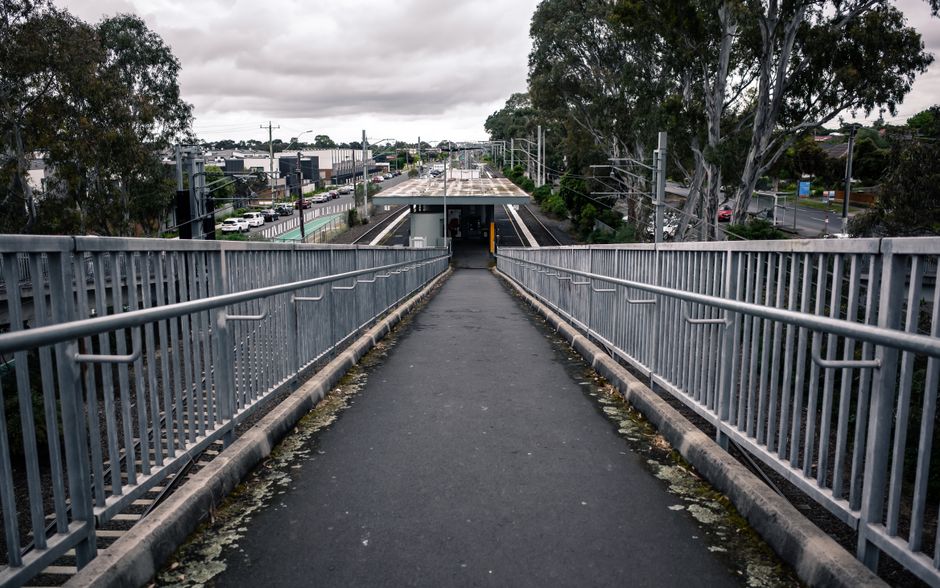
If you commute through Belmont Station, rubbish removal probably sits in that awkward gap between "must do" and "how on earth do I fit it in?". A broken chair by the hall door, a bag of flat-pack offcuts, a loft clear-out that grew legs, or garden waste sitting in black sacks by the side gate - it all needs shifting, but not at the expense of your commute, your evening, or your sanity. This Belmont rubbish removal guide for Belmont Station commuters is written for exactly that kind of real-life mess: time-poor, transport-aware, and keen to get the job done without faff.
In the sections below, you'll find the most practical ways to remove waste around a busy commuter routine, how to choose between skip hire, wait-and-load, man and van clearance, and grab hire, plus the common mistakes that can turn a simple tidy-up into a headache. We'll keep it clear, local in feel, and honest about what works best in everyday use.
One thing to bear in mind: the best solution is not always the biggest one. Sometimes it's the one that gets in, gets out, and lets you catch your train without a second thought. That's the real aim here.
Why Belmont rubbish removal matters for Belmont Station commuters
Commuters usually need two things from waste removal: predictability and speed. If you are leaving home early, getting back late, or juggling school runs and work calls in between, the last thing you want is a service that blocks the drive, takes all day, or needs constant supervision. That is where a commuter-friendly approach matters. It is not just about getting rid of rubbish; it is about fitting the job neatly around a day that is already full.
Belmont Station commuters often work with narrow windows of time. Early mornings, lunch breaks, and evenings can be the only practical slots available. That makes flexible waste collection much more valuable than a slower, more cumbersome clear-out method. In practice, this often means choosing a service that can be booked in advance and completed while you are away, or one that is quick enough to handle before you head out.
There is also the stress factor. Rubbish build-up changes how a home feels. A hallway starts to narrow, a garage becomes a storage cave, and the car boot is permanently half full of stuff you meant to sort weeks ago. It happens. The good news is that a thoughtful removal plan can clear that pressure quickly.
If your waste includes anything a little more specific - old appliances, mattress disposal, confidential paperwork, garden cuttings, or builders' waste - it helps to use a provider that can handle the right stream properly rather than taking a one-size-fits-all approach. For many households, that means combining a general clearance with one or two specialist services such as rubbish removal, mattress and sofa disposal, or fridge and appliance removal.
Expert summary: For station commuters, the best rubbish removal plan is usually the one that minimises waiting time, avoids unnecessary trips, and lets you leave home with the job already under control.
How Belmont rubbish removal guide for Belmont Station commuters works
At its simplest, rubbish removal works by matching your waste to the right collection method. That might be a pre-booked load-and-go clearance, a skip placed on private land, a grab lorry for larger volumes, or a smaller man and van service for lighter loads. The trick is choosing based on how much waste you have, how quickly it needs to go, and whether you will actually be around to manage it.
For commuters, the flow usually looks like this:
- Assess the waste - list what needs removing and roughly how much space it takes up.
- Separate the waste type - household clutter, green waste, builders' debris, electricals, or anything hazardous.
- Pick the collection method - skip hire, wait-and-load, man and van, or grab hire.
- Check access - driveway space, road access, parking, and whether a permit may be needed.
- Book a time that fits your commute - early, late, or during a predictable work-from-home slot.
- Prepare the items - break down bulky goods, bundle loose material, and keep restricted waste separate.
- Let the collection happen - ideally with minimal interruption to your day.
In many real situations, the most commuter-friendly option is wait and load skip hire, because it removes the need to leave a skip on the street or keep it outside for days. That is a practical advantage if you live near busier roads, have limited parking, or simply don't want a skip sitting outside while you're at work. If you do need a skip for a longer period, it is worth reading up on skip hire and skip permits before you book.
A useful rule of thumb: if you can load the waste quickly and do not need long-term storage, a rapid collection service often makes life easier. If you are mid-renovation and waste will build up over several days, a skip may be the better fit. Different job, different tool. Simple as that, really.
Key benefits and practical advantages
Good rubbish removal does more than make a space look tidy. It saves time, reduces stress, and stops waste from hanging around until it becomes a bigger problem. For Belmont Station commuters, that matters because time is the main constraint. You are not usually trying to run a giant site clearance project. You are trying to get a room, garden, garage, or flat back to normal with as little disruption as possible.
- Time efficiency: fewer trips to the tip, fewer bags left by the door, less weekend swallowed by disposal runs.
- Cleaner access: a cleared hallway or driveway makes busy mornings less chaotic.
- Less physical strain: lifting, loading, and driving waste yourself can be tiring after a full working day.
- Better planning: pre-booked removal keeps the job from dragging on for weeks.
- Flexible fit: there are options for household clutter, garden waste, trade waste, and bulky items.
- More reliable finish: once waste is gone, it is gone. No half-finished piles still waiting for attention.
There is also a mental benefit people underestimate. A cluttered area creates background noise in your head. You see it on the way out the door, and again when you come home tired. Clearing it properly can make the whole place feel lighter. Not magical, just real.
If sustainability matters to you, look for services with a clear approach to sorting and recovery. Belmont customers often want reassurance that waste is handled responsibly, not just tipped somewhere and forgotten. It is sensible to review recycling and sustainability before deciding how to proceed.
Who this is for and when it makes sense
This guide is especially useful if you live or work around Belmont Station and need rubbish removed without it taking over your day. That could be a one-off domestic clear-out, a landlord turn-around, a garden refresh, or a work project that is generating mixed waste.
It tends to make sense for:
- commuters who only have early-morning or evening windows available
- people with no car, or no appetite for several trips to a waste site
- households preparing for moving day, refurbishment, or a deep declutter
- renters and homeowners dealing with bulky items or accumulated waste
- small businesses needing office or storage clearance
- builders or tradespeople with regular debris to remove
For a family clearing the spare room after years of "we'll sort it next weekend", the right service might be a man and van clearance. For a builder working with rubble, offcuts, and mixed construction waste, a better match could be builders' skip hire or even builders waste removal. Different job, different rhythm.
And if you are dealing with office paperwork or old records, you should not just "throw it all in a box and hope". There is a better route for that: confidential shredding. A small thing, but an important one.
Step-by-step guidance
If you want the simplest possible route, use this sequence. It works for most commuter schedules and cuts out a lot of guesswork.
1) Identify what actually needs removing
Start with the obvious stuff. Then check the awkward corners: under the stairs, behind the shed, in the garage, or at the back of the loft. You may notice the real volume is smaller than it first looked, or sometimes larger. Funny how that happens once the bags are actually counted.
2) Separate ordinary waste from specialist items
Keep general rubbish separate from things like fridges, freezers, sofas, mattresses, paint, or anything you suspect may be classed as hazardous. A mixed pile sounds convenient until it is not. If in doubt, ask before loading. That saves time on collection day.
3) Decide whether you need a skip or a collection service
If waste will build up over time and you have private space for a skip, you may prefer a standard skip solution. If you want the waste gone on a specific day with no lingering container outside, a rapid collection service is often better. This is where skip sizes and prices can help you judge what you need without overpaying for empty space.
4) Check access before you book
Measure the driveway if needed, think about low trees, narrow lanes, parked cars, and whether someone will need to be present. For road placements, ask about permits or alternatives. It is one of those boring details that saves a lot of grief later.
5) Prepare the waste properly
Break down bulky cardboard, flatten furniture if practical, and keep sharp or dirty items contained. If you are using a skip, you will also want to understand what can go in a skip before filling it. That avoids rejected loads and unnecessary delays.
6) Book around your commute
Choose a slot that does not clash with your journey. Many people prefer first thing in the morning, before the school run and tube or train pressure begins. Others pick a late-afternoon window after they are back. There is no perfect answer, only the one that fits your day.
7) Confirm payment, access, and responsibility
Make sure you understand what is included, where the team will park, and who is responsible for access. If you want a smooth booking process, check payment and security and terms and conditions before you commit. Not glamorous, but wise.
Expert tips for better results
There are a few small habits that make a huge difference. Nothing dramatic, just the sort of practical tweaks that save time and money.
- Photograph the waste pile before booking. It helps with estimating size and spotting anything restricted.
- Group similar items together. Garden waste, wood, metal, and household clutter are easier to handle when sorted.
- Use a "no return" pile. Once something enters the waste zone, do not rescue it twice. You know the chair. You don't need the chair.
- Plan for walking space. Leave a clear path from the waste to the pickup point.
- Keep weather in mind. In wet weather, cardboard and soft furnishings become heavier and messier fast.
- Ask about same-day options if you are short on time. This can be a lifesaver if your only free window is suddenly today. See same-day skip hire for time-sensitive jobs.
Another useful tip: think in terms of "touches". The fewer times you move an item, the better. If you bring it downstairs, try to keep it there. If it is going out, let it go out. Simple, but very effective.
For larger or more awkward loads, especially where access is tight, a grab hire service can save a surprising amount of effort. It is not always the first thing people consider, yet for bulky garden or construction waste it can be the neatest answer.
Common mistakes to avoid
A lot of rubbish removal problems come from good intentions and bad timing. Fair enough. Everyone wants to get it sorted quickly. But a quick job can become an expensive one if you skip the basics.
- Underestimating volume: a pile that looks small often grows once broken down and loaded.
- Mixing restricted items with general waste: this causes delays and, in some cases, refusal of collection.
- Ignoring access issues: parked cars, narrow gateways, and road restrictions can derail the day.
- Choosing the wrong service type: a skip is not always better than a clearance team, and vice versa.
- Leaving booking too late: commuter schedules are tight, so last-minute arrangements can be awkward.
- Forgetting permits or placement rules: if a skip needs to sit on the road, this matters more than people expect.
One of the most common mistakes is assuming any waste can go anywhere. It cannot. Hazardous items need care, and electricals or appliances may need separate handling. If you have chemicals, paint, batteries, or similar items, check before loading. For more complex items, start with hazardous waste disposal rather than taking a guess.
And honestly, one of the sneakiest mistakes is simple indecision. You keep the rubbish because you are not sure what to do with it. Meanwhile, it stays. The pile wins. Not this time.
Tools, resources and recommendations
You do not need a van full of equipment to make waste removal easier. A few basic tools go a long way.
- Heavy-duty bags for loose rubbish, leaves, and lightweight mixed waste
- Gloves for handling sharp, dirty, or dusty items
- Labelled boxes for sorting items you may want to keep, donate, or recycle
- Wheelbarrow or sack truck if you are moving heavier material across a garden or driveway
- Clear measuring tape to judge access points or estimate skip space
- Camera phone to record the load before collection quotes are discussed
When you are comparing service options, these pages can be useful starting points: domestic skip hire for home projects, house clearance for larger property clear-outs, garage and loft clearance for those hidden-overflow spaces, and garden waste removal when the outdoor pile is growing faster than the bins can cope.
If your site is tighter than average or you want the least disruption possible, it is also worth looking at enclosed and lockable skip hire. That can be especially useful where security or wind-blown litter is a concern. And for businesses, commercial skip hire can be the better fit when waste is continuous rather than one-off.
Law, compliance and best practice
Waste removal in the UK is not something to treat casually. You do not need to be a legal expert to stay on the right side of sensible practice, but you do need to be careful. The basic principle is straightforward: waste should be handled by appropriate means, and you should know what you are putting out and where it is going.
For householders, the practical issues usually involve safe sorting, avoiding prohibited items in a skip, and checking whether a road permit is required. For businesses and trades, the expectations are stricter because waste streams can include construction debris, mixed loads, or materials that need clear segregation. In those cases, services such as construction waste disposal, construction waste clearance, and demolition waste removal may be more appropriate than a general household collection.
Best practice also means being honest about waste contents. If something is potentially hazardous, fragile, or unusually heavy, say so. It helps the provider choose the right vehicle, the right crew, and the right handling method. That sounds obvious, but it is exactly where a lot of avoidable problems begin.
If a permit is needed, do not assume it will sort itself out. A quick check on skip-hire permits or skip permits is a sensible step before booking. Likewise, if you want assurance around service standards, insurance, and operational care, the supporting pages on insurance and safety and health and safety policy are worth reviewing.
Options and comparison
Choosing the right method is often the difference between a smooth afternoon and an irritating one. Here is a plain-English comparison.
| Option | Best for | Strengths | Watch-outs |
|---|---|---|---|
| Standard skip hire | Ongoing home, garden, or renovation waste | Good capacity, flexible loading, useful for gradual clear-outs | May need a permit if placed on the road; can sit outside longer than you want |
| Wait and load | Commuters, tight streets, quick clearances | No long street placement, fast turnaround, low disruption | You need to be ready to load promptly |
| Man and van | Smaller clear-outs, mixed household items | Hands-on help, flexible for awkward items, ideal for flats or garages | Not always the best value for very bulky loads |
| Grab hire | Heavy waste, rubble, garden debris, access-limited sites | Useful where manual loading is hard; can handle large volumes quickly | Needs space for the grab vehicle and sensible stacking |
| Specialist disposal | Appliances, sofas, mattresses, confidential items | Better handling for specific item types | Often must be separated from general rubbish |
In commuter terms, wait and load or man and van often feels easiest for quick domestic jobs. Skip hire tends to win for longer projects. Grab hire is the practical choice when the waste is bulky or heavy and you do not fancy carrying it piece by piece. Truth be told, the "best" option is usually the one that matches your access and your timetable.
Case study or real-world example
Picture a Belmont commuter coming home on a Thursday evening to a dining room full of moving boxes, an old sofa, and a pile of loft clutter that has been migrating downstairs for three weekends in a row. Friday's commute is already packed, and Saturday is gone by lunchtime. In that situation, a full-size skip left outside for days would feel like overkill, and multiple trips to a waste site would eat the whole weekend.
What worked best here was a short-notice collection with the waste pre-sorted into separate piles: general clutter, bulky furniture, and a few items that needed special handling. The home owner photographed everything in daylight, checked access to the driveway, and booked a time before the morning rush. The job was done while they were out. By the time they got back, the hallway was clear, the room was usable again, and the only thing left was the slightly odd sensation of not tripping over a pile of "later" items.
That is the sort of result commuters usually want. Not a perfect-life makeover. Just one less thing hanging over the week.
Practical checklist
Before you book, run through this quick list. It keeps the process simple.
- Have I identified exactly what needs removing?
- Do I know whether the waste is general, bulky, green, mixed, or specialist?
- Have I checked for restricted items?
- Do I know whether access is suitable for a skip, van, or grab lorry?
- Will I need a permit if anything sits on the road?
- Have I chosen a time that fits around my commute?
- Have I measured the space if a skip is involved?
- Have I separated items that need specialist handling?
- Do I understand the booking terms and payment process?
- Have I considered recycling and responsible disposal?
If you can tick most of those off, you are already ahead of the game. And yes, a quick five-minute plan can save a very long afternoon.
Conclusion
For Belmont Station commuters, rubbish removal works best when it is treated as a time-management problem, not just a waste problem. Once you think that way, the decision gets easier. You choose the option that matches your access, your schedule, and the type of waste you actually have. Not the one that sounds biggest, and not the one that looks cheapest at first glance.
Whether you need a one-off clearance, a regular trade solution, or a quick same-day pickup, the key is to keep it practical. Sort the waste, check the access, choose the right service, and avoid the common traps. It really can be that straightforward.
And if you are standing in the hallway wondering where to begin, start with the smallest pile. Momentum matters. Once one corner is clear, the rest suddenly feels manageable.
Get a free quote today and see how much you can save.
Frequently Asked Questions
What is the best rubbish removal option for Belmont Station commuters?
For many commuters, the best option is the one that finishes quickly and does not require you to manage waste over several days. Wait and load, man and van, or a pre-booked skip can all work well depending on the size of the job and your access.
Do I need a skip permit if the skip is on the road?
Often, yes. If a skip is placed on public highway space, a permit may be needed. It is sensible to check this before booking so there are no last-minute surprises.
Is wait and load better than skip hire?
Sometimes. If you want the waste gone quickly and do not want a skip left outside, wait and load can be a very efficient choice. If your waste will build up over time, standard skip hire may be more practical.
Can I put furniture in a skip?
Usually, many types of furniture can go in a skip, but bulky items should be broken down where possible. Sofas and mattresses may be better handled through specialist disposal services.
What should I do with appliances like fridges or freezers?
Do not assume they can go in with ordinary rubbish. Fridge and appliance removal is often the safer, cleaner option because these items may need specific handling.
How do I know what size skip I need?
Think about the type of waste and whether it is loose, bulky, or heavy. If you are unsure, reviewing skip sizes and prices can help you choose a sensible size without paying for space you will never use.
Is same-day rubbish removal possible?
In many cases, yes, if availability allows. Same-day skip hire or urgent collection is especially useful when your timetable changes suddenly and you need the space cleared fast.
What items are considered hazardous?
Items such as chemicals, certain paints, batteries, and some contaminated materials may need special handling. If you are unsure, separate them and ask before loading anything.
Can I use rubbish removal for garden waste?
Yes, and garden waste removal is often one of the most straightforward services to book. It is particularly useful after pruning, landscaping, or a seasonal clear-up.
What if I live in a flat with poor access?
A man and van collection or wait and load service may suit you better than a skip. Poor access, narrow stairwells, or limited parking can make traditional skip placement less convenient.
How can I reduce the cost of rubbish removal?
Sort your waste before collection, remove restricted items, and choose the smallest practical option for the job. If you only need a short loading window, avoid paying for time or space you do not need.
Is there a difference between rubbish removal and house clearance?
Yes. Rubbish removal is often used for mixed waste or specific unwanted items, while house clearance is generally more suitable for larger, room-by-room or whole-property clear-outs.
Will my waste be recycled?
That depends on the type of waste and the service used, but responsible providers aim to sort and recover as much as possible. It is worth checking recycling and sustainability information before you book.
What is the easiest first step if I feel overwhelmed?
Start by making one small pile of obvious rubbish and one pile of items you want to keep. That single action usually makes the rest of the job feel much less heavy.